

Customer relationship management within the medical sector allows organizations to boost their overall effectiveness by creating measurable connections between all involved parties — including patients, staff members, referrals, as well as providers. This results in lower costs, enhanced medical services, along with a smoother client experience.
This article will guide you through details of developing Client Relationship Management software for medical field, highlighting its key benefits, features along with challenges to overcome. You will also learn why creating a custom medical CRM from ground up is a strategic long-term investment.
Understanding Healthcare CRM Development
Developing client management software for medical institutions involves creating specialized solutions designed to optimize user interactions, oversee bookings, monitor health records, as well as improve overall satisfaction. For medical service providers, these systems offer a unified platform for efficiently managing user data, appointments, in addition to communication.
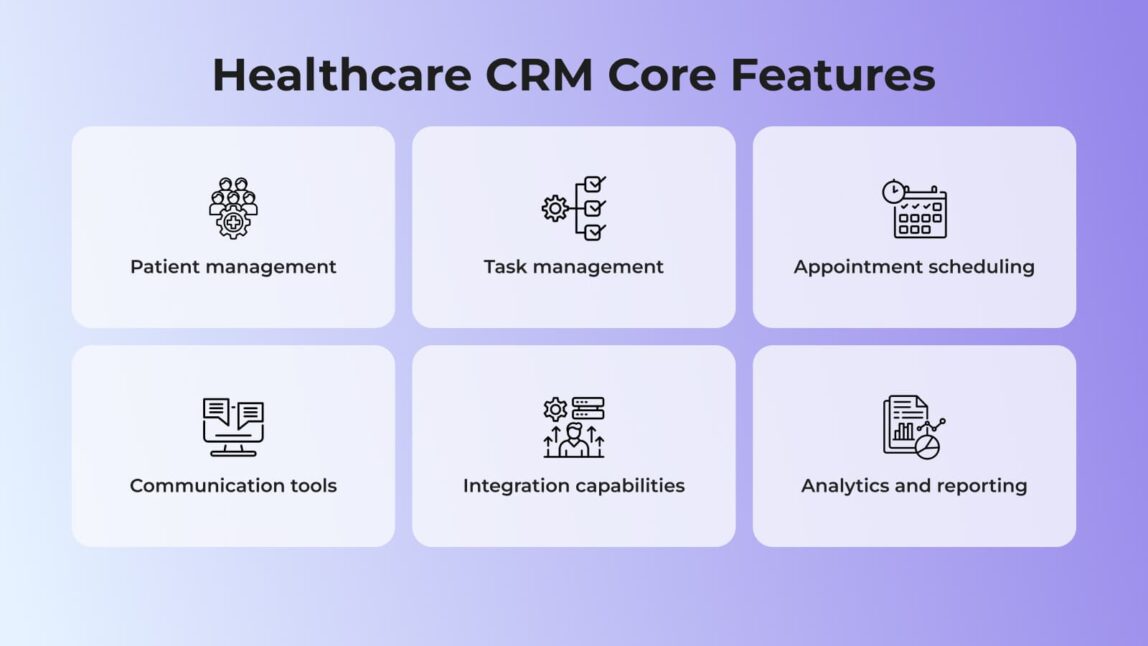
Such systems streamline tasks like scheduling and sending notifications, allowing staff to devote more time to direct care. These solutions also facilitate seamless coordination among medical teams, ensuring smooth collaboration as well as information sharing, ultimately leading to better outcomes with greater client satisfaction.
Various features of client management software enhance the user experience by automating and personalizing outreach efforts, such as sending birthday greetings or customized emails, while recording interactions to understand user preferences. The software also helps manage referrals by tracking details about specialists or institutions, supporting direct connections with relevant experts.
These digital platforms store as well as analyze user data, including demographics, health history, insurance details, or social information, to extract valuable insights. This enables medical facilities to create strategies focused on user growth by recognizing patterns and behaviors. Additionally, since these interactions often take place in users’ personal environments, this approach fosters lasting connections between organizations and their clients.
Benefits of CRM Software Development for Healthcare
In order to improve daily operations as well as gain a more extensive knowledge of their clientele, medical organizations frequently employ client relationship management systems. Now let’s examine significance of CRM software in the medical field.
- It reduces medical errors: Centralizes patient data as well as automates processes, minimizing risks as well as improving patient safety.
- Boosts patient experience: Enables personalized interactions, proactive communication, and better patient engagement.
- Secures sensitive data: Implements strong security measures to protect patient information and ensure compliance.
- Manages patient data effectively: Centralizes and streamlines patient information for smoother decision-making and care coordination.
- Optimizes internal tasks: Automates administrative processes and improves resource management for higher efficiency.
- Collects service feedback: Gathers and analyzes patient feedback to enhance care quality and patient satisfaction.
Partnering with a reliable healthcare software development company can help organizations fully leverage these benefits and implement a CRM system that aligns with their specific operational needs.
Types of Medical CRM
Below, we outline key types of health client management software essential for enhancing user care, streamlining administrative tasks, in addition to improving overall operational management.
The CRM solution is a powerful tool that improves interactions between service providers and clients. It is essential for handling communication, scheduling appointments, fostering engagement while promoting collaboration with professionals; ultimately elevating user care.
The Analytics solution is a data-driven asset that leverages information to support decision-making for better outcomes. By unifying data from multiple sources, including electronic records, it offers valuable insights into user demographics, treatment effectiveness alongside resource allocation, enhancing comprehensive management.
The Referral Management solutions are designed to streamline and optimize referral process within service systems. These solutions play a critical role in efficient operations by managing and tracking client referrals effectively, ensuring clear communication between referring as well as receiving specialists, thereby boosting overall network productivity.
Clinical Healthcare client relationship managing solution must be purpose-built to assist healthcare professionals in managing and organizing clinical workflows. These systems are frequently integrated with Electronic Health Records (EHRs) during healthcare CRM development and support care coordination, documentation, and treatment planning.
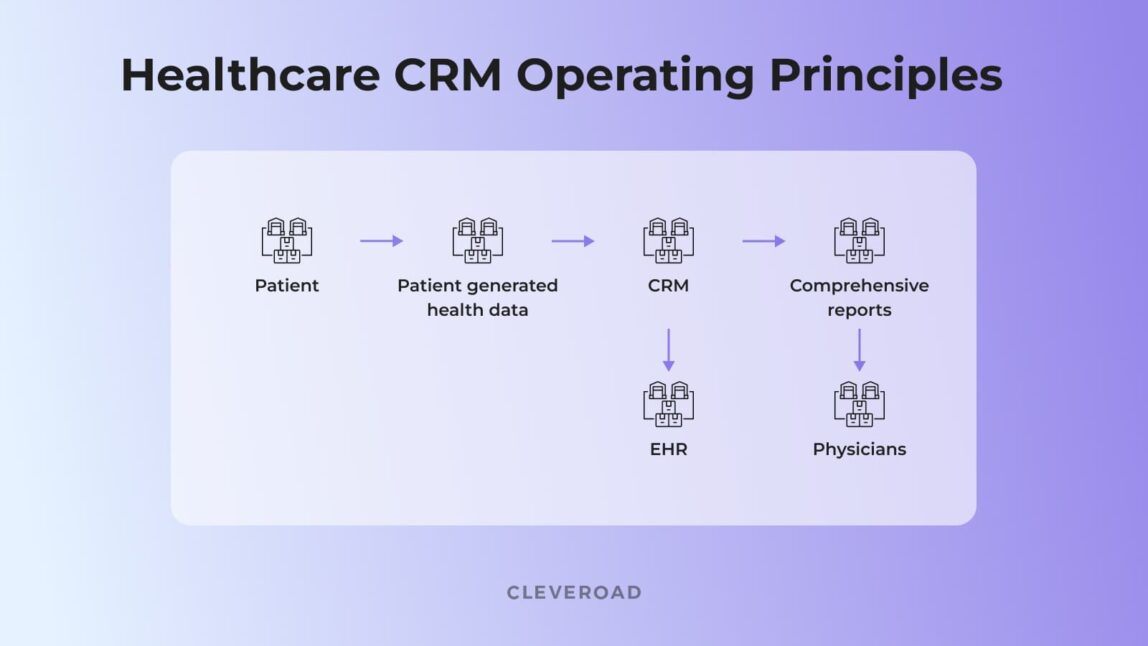
How Healthcare CRM Works
Let’s take a closer look at the empowering capabilities of healthcare CRM. By offering a detailed understanding of patients, these tools enable administrators and physicians to better address the needs of healthcare facilities, thereby enhancing effectiveness of medical services.
The development of healthcare CRM software grants health organizations the benefit of gaining a deeper understanding of their clientele. With this goal in mind, healthcare CRM tools can evaluate data and identify various patterns related to patients, such as sincerity, attendance, no-show rates, physician referrals, and the success of outreach efforts. This information can help physicians improve their interactions with each patient, thereby enhancing care.
The health of high-risk patients can be significantly jeopardized if there is a delay of a few months for an essential scan or blood test. To mitigate this, hospitals implement healthcare CRM systems that facilitate automated reminders for timely appointments. These reminders are dispatched via emails, phone calls, and text messages. Once hospital staff input patient information into the system, the software takes over management of these details.
A medical CRM platform aids healthcare providers in gathering patient feedback to gauge their experiences. This feedback can lead to service enhancements and an improved patient experience for both doctors and administrators. A healthcare CRM automates the process of distributing and collecting feedback.
Conclusion
We’ve disclosed the basics you should know about healthcare CRM development. If you want to know more about it, you should contact the skilled healthcare software development vendor. The vendor’s specialists can guide you through the process, offer tailored solutions, and help implement a CRM system that meets your healthcare organization’s specific needs.