

Learning management systems are now considered an important integral part of the healthcare industry as they assist in training the healthcare staff, maintaining their certifications, and adhering to the set standards. Effective LMS, in particular, can create a better solution to the complex training issues existing in the healthcare organization, which could enable an efficient and cost-effective mode of training. This guide will then lead you through the process of developing a healthcare LMS with overviews of relevant features, technologies, and techniques.
What is a Healthcare LMS?
A Healthcare Learning Management System (LMS) is a defined web-based and application-centric architecture that is used in healthcare for training and education administration. It enables hospital, clinics, or other health care organization to dispense, monitor, and administer learning training programs like certification training, continuing education courses, or compliance training for healthcare practitioners.
A good healthcare LMS should not only be a normal, basic e-learning software, but it should also include solutions for particular medical issues: reporting with HIPAA, tracking certifications, and administration of certain types of medical content.
Why Should You Consider Creating a Healthcare LMS?
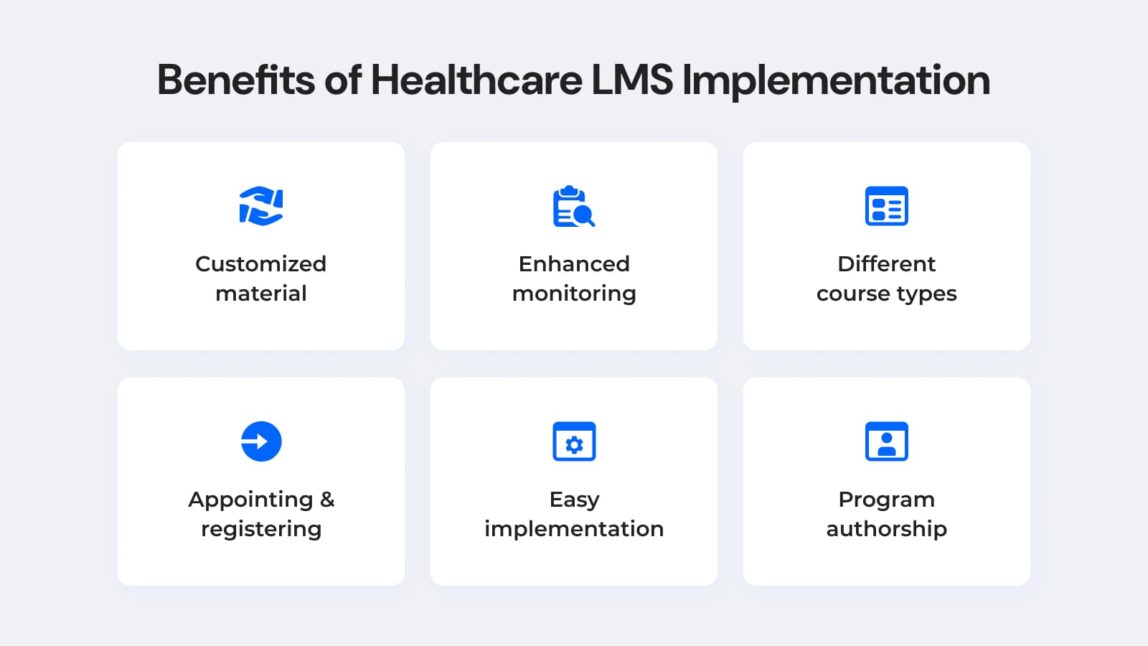
The desire to frequently provide new staff training and development and continuously update existing staff as to changes in the many healthcare regulations present a challenge for healthcare organizations. A well-implemented healthcare LMS addresses these needs by:
- Streamlining Training: Replacing traditional face-to-face training by automating a course and making it easily accessible.
- Compliance: Ensuring that the employees are well-versed in all the certifications and the legal working bare minimums.
- Cost Efficiency: Smoother implementation of LMS minimizes the cost related to using printed material, instructors and class rooms.
- Improved Outcomes: It also enhances convenience in helping healthcare workers find new resources to enhance overall patient care and safety.
Key Functionalities of a Healthcare LMS
Before diving into the development process, it’s important to outline the core features that will make your Healthcare LMS effective:
1. Compliance Management
It is important that the company’s employees remain compliant with healthcare legislation like HIPAA, OSHA, or GDPR, depending on their area of operation. Recertification is another aspect that your LMS should be able to capture and give alerts or notifications about renewal dates.
2. Course Management
It should be also equipped with tools to create, implement and deliver the healthcare-oriented courses, training modules, quizzes, multimedia and others.
3. Reporting and Analytics
Sophisticated tools for reporting are vital to learners’ progress, the effectiveness and efficiency of the course, and the analysis of training needs.
4. Mobile Accessibility
Healthcare professionals practice in environments that are often time-sensitive so the compatibility of the system with mobile is crucial to provide the learners with training on the go.
5. Assessment and Testing
Concept practicing elements enable institutions to assess the understanding of staff regarding significant healthcare practices.
6. User Roles and Permissions
It is recommended that various roles (admins, instructors, learners) should possess certain permissions; the content with sensitive information should be protected.
How to Build a Healthcare LMS: Steps to Follow
Step 1: Define Your Objectives
The best way to answer this question is to understand first what needs to be achieved by your healthcare LMS. Therefore, the need to look at the particular requirements of the training needs in that organization. Do you need mandated training, such as compliance training continuing medical education (CME,) or are you developing training for new staff? Determine the intended trainees (nurse, doctor, administrative support) and the knowledge deficits related to training that you want to fill in.
Step 2: Choose the Right Platform
Choosing the right platform is one of the most important processes. There’s the option of getting a professionally built one or selecting from readily available LMS for the healthcare industry. Ad hoc solutions are more adaptable and can be easily expanded; however, they are often more expensive and require more time for implementation. For user-created packages, Moodle is suggested as one that can be quickly implemented but may need some adjusting in a medical context or like Blackboard.
Consider factors such as:
- Scalability: Can it accommodate the growth of your organization?
- Integration: Another question, will it fit perfectly into the structure of hospital systems like, electronic health records (EHR)?
- User Experience: It should be very simple for the staff to navigate it despite their technical skills to operate it.
Step 3: Develop Essential Features
Engage your development team to hire the best LMS developers to ensure that some basic functionalities specific to a healthcare LMS are followed (as listed above). You may also want to add other features specific to your organization’s needs.
The system should be able to handle a variety of content types, including videos, lessons, and documents. Use quizzes and knowledge checks to assess users’ progress and confirm what they have strived to realize.
Step 4: Create With compliance and security in mind
Health care in particular, is a very secure field, meaning compliance and security have to come first. Your LMS must meet the requirements of the law, such as the HIPAA for the USA or GDPR for Europe, depending on where you practice.
Key considerations include:
- Data Encryption: Make data protected both when in transit and when stored.
- Access Control: Ensure that the users are well authenticated by the password system in order to avoid incidences of profile invasion.
- Backup and Recovery: Ensure that the system’s backup resources are fully automated to avoid data loss.
Step 5: Test and Launch
The learner management system needs to be tested beforehand so as to ensure that once it is launched the problems are solved. This should encompass the functionality tests (does every component of the software work rightly?), security tests (is the data safe?) and the User Acceptance Testing (is the software easy to use by the end users?).
After the tests, you will implement the LMS and, if needed, offer the requisite training to the instructors/learners on how to navigate it properly.
Final Thoughts
A Healthcare Learning Management System is an investment that will revolutionize training in the healthcare environment, enhance compliance and improve the quality of the services delivered by the staff. Following this guide must put you in a position to create a strong and secure LMS with all the requirements the healthcare sector might need.
They will be crucial in maintaining your organization’s competitiveness as technology advances, as well as preventing noncompliance. At the same time, your staff will be trained on continual and modern lessons to prepare for the complexities of the current and future health systems.